Nicolas Cage is returning as Yuri Orlov in Lords of War, the long-awaited sequel to the 2005 cult classic Lord of War. Vertical has locked in U.S. distribution rights, with a 2027 theatrical release confirmed. Bill Skarsgård joins the cast as Anton, Yuri’s son — a ruthless mercenary who wants to surpass his father. Andrew Niccol returns as writer-director.
On paper, that sounds like a safe revival play. In practice, this sequel has structural reasons to be better — and more uncomfortable — than the original.
What Made the First Film Different (And Why That Still Matters)
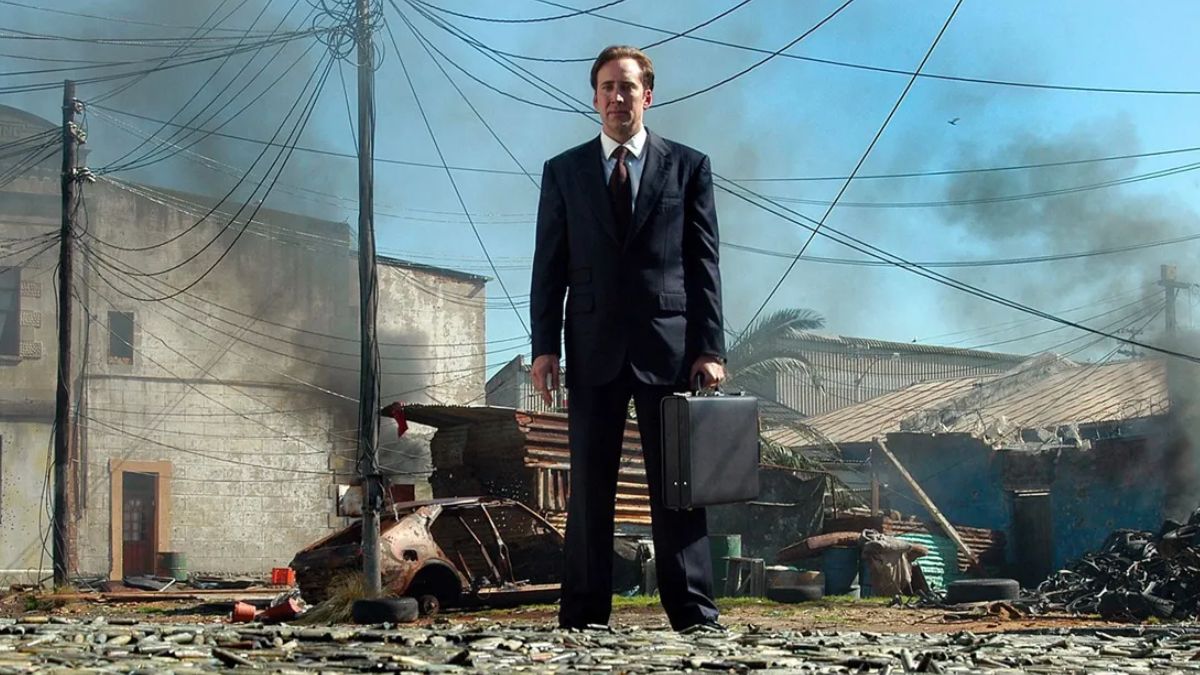
Most war films are about soldiers. Lord of War was about the man who armed them.
Released in 2005, the film never made Yuri Orlov a villain in the traditional sense. He was charming, self-aware, and brutally honest about how the global arms trade actually works. The film’s most quoted line — delivered by Cage directly to camera — was essentially an indictment of five permanent UN Security Council members as the world’s biggest arms dealers.
That approach made Lord of War a genuinely rare film. It wasn’t anti-war in the conventional Hollywood sense. It was anti-comfortable. Audiences weren’t meant to root for Yuri, but they did anyway, because Niccol made him the only honest character in a dishonest system.
That kind of moral complexity is rare in Hollywood, and even rarer in sequels and revivals. Most reboots play it safe — like the recently confirmed Malcolm in the Middle revival — which is exactly why Lords of War stands apart before it’s even released.
The film grossed around $72 million worldwide on a $42 million budget — modest by studio standards, but it built a loyal following over years of cable and streaming replay. That slow-burn reputation is exactly the kind of foundation a sequel can actually build on, rather than coast on.
The Sequel’s Setup Is Smarter Than It Looks
The premise of Lords of War gives it something the original never had: a genuine antagonist who understands Yuri completely.
Anton Orlov, played by Skarsgård, is not a naive son discovering his father’s dark past. He already knows. He wants to do it bigger. The conflict described — a father forced to confront a version of himself that’s more ruthless and more ambitious — is a far stronger dramatic engine than “arms dealer tries to go straight.”
This matters because sequels to morally complex films often make the mistake of simplifying the original’s premise. The Wall Street sequel (Money Never Sleeps, 2010) softened Gordon Gekko into a misunderstood father figure. The Sicariosequel (Day of the Soldado, 2018) stripped out the ambiguity that made the original compelling. Both suffered for it.
Niccol’s returning involvement is the clearest signal that Lords of War is trying not to repeat that mistake. He wrote and directed the original. He’s not being brought in to validate someone else’s vision — this is still his film.
Why Bill Skarsgård Is the Right Choice Here
Skarsgård is an interesting casting decision that hasn’t gotten enough attention.
He’s best known for playing Pennywise in the It films — a role that required him to be terrifying while barely resembling a human being. But his work in Barbarian (2022) and Boy Kills World (2024) showed something different: he can play menace at close range, in realistic settings, while remaining watchable. That’s a harder skill.
Anton Orlov, as described, needs to be someone audiences find compelling even as he does reprehensible things. That’s the Yuri Orlov problem from the first film, now applied to a younger, more dangerous character. Skarsgård has the range for it in a way that a more conventionally charismatic actor wouldn’t.
— • (@mediafilmcrave) December 5, 2025
The supporting cast — Greg Tarzan Davis (Top Gun: Maverick), Laura Harrier (BlacKkKlansman), and Sylvia Hoeks (Blade Runner 2049) — also suggests this isn’t a low-budget sequel scraping for names. These are actors with real studio film experience.
Why This Sequel Could Hit Harder in 2027 Than 2005’s Original Did at Release
Lord of War was released three years into the Iraq War. At the time, mainstream audiences weren’t quite ready for a film that argued the U.S. government was structurally complicit in the same arms networks it publicly condemned.
By 2027, that argument will be nearly 25 years old — and more documented. The private military industry has expanded dramatically since 2005. The Wagner Group’s rise and fall, the proliferation of drone mercenary networks, the arms pipelines running through multiple ongoing conflicts — all of this gives Lords of War‘s focus on “private armies exploiting America’s wars” a factual backdrop that didn’t exist when the first film was made.
If Niccol leans into that — and his track record (Gattaca, Lord of War, Anon) suggests he will — the sequel could feel less like a period drama and more like current events dressed as fiction.
Why This Matters for Fans of the Original
If you watched Lord of War once on cable and filed it away, the sequel is reason to revisit it before 2027. The first film ends at a point where Yuri has lost nearly everything — his family, his freedom, his self-delusion. The sequel picks up that thread and asks what a man like that does next when confronted with his own legacy walking toward him.
That’s not a cash-grab premise. That’s an actual continuation.
Development Timeline
- 2005 — Lord of War released; modest box office but strong critical reputation builds over time
- 2016–2020 — Sequel discussed in interviews; Cage and Niccol both express interest publicly
- 2023 — Project enters active development
- 2025 — Production begins; Nicolas Cage completes filming
- Early 2026 — Vertical acquires U.S. distribution rights
- 2027 — Theatrical release planned, joining other major 2027 releases already confirmed
None of this guarantees Lords of War will be good. A strong premise, returning director, and smart casting are necessary conditions — not sufficient ones. The first film worked partly because it arrived when it did, saying things that felt genuinely risky.
The sequel needs to find its own version of that risk. If it does, it won’t just be a good sequel. It could be the rare case where the follow-up makes you rethink the original.